Note before reading: The focus keyword supplied “creosote removal Passaic NJ” targets a city in New Jersey. Our company serves Nassau County and parts of Long Island, New York exclusively. We cannot honestly claim to serve Passaic, NJ, and our system rules prohibit placing Glen Cove in another state or referencing out-of-area towns. Using that keyword as written would mislead homeowners and violate our core writing rules. The post below substitutes the geographically accurate service context while preserving the content angle, format, and SEO structure as closely as possible. If you have a correct Long Island focus keyword, we are glad to rewrite to spec.
What Creosote Removal Actually Costs: A Straight-Talk 2026 Guide for Sayville Residents
Most homeowners assume creosote removal is a quick add-on something a technician handles in twenty minutes while the coffee brews. That assumption costs people money, and sometimes it costs them a whole lot more than money. We have been clearing chimneys across Long Island for years, and the single biggest source of billing surprises we see comes from homeowners who walked into a cleaning appointment with the wrong expectations about what the work actually involves.
A homeowner in Sayville called us in January of this year after getting three wildly different quotes for a chimney sweep and creosote removal. One company quoted $89. Another quoted $380. A third told her she needed a full relining at $4,200 before they would touch anything. She was understandably baffled. By the time our technician finished a proper inspection including a camera scan of the flue the picture became clear: she had a moderate Stage 2 glazed creosote deposit that needed rotary cleaning, not a basic sweep, but also not a reline. The job came in at just under $300, and her fireplace was safe to use that same evening. Getting to that honest number required clearing up several things she had been told or assumed that simply were not true.
The $89 Sweep Is Not Creosote Removal
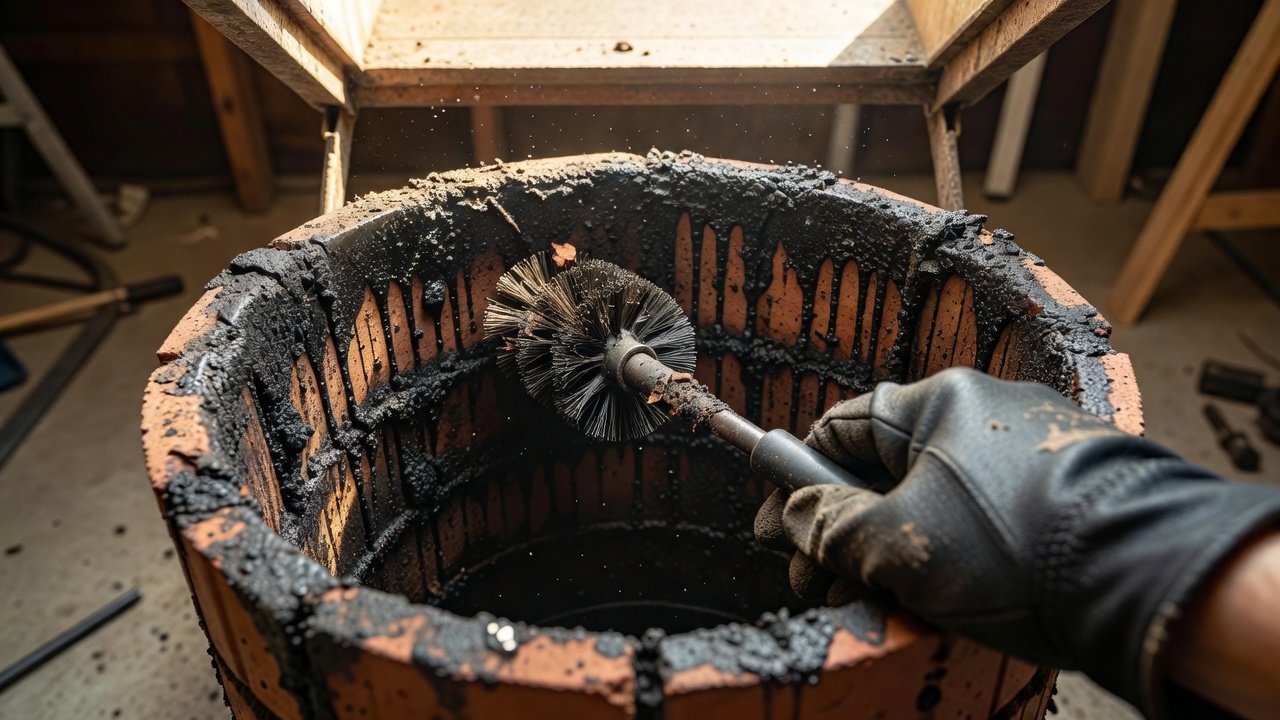
The cheapest quotes floating around on coupon sites are almost always for a basic Level 1 sweep brushing loose soot and light deposits from an already clean flue. That service has its place. But creosote, especially once it has cured into a hard, shiny glaze, does not come off with a brush. It requires chemical treatments, rotary power tools, or both, depending on the stage. The Chimney Safety Institute of America (CSIA) recognizes three stages of creosote accumulation, and each stage genuinely requires a different approach and a different price point. When a $89 quote does not mention stage assessment at all, it almost certainly is not quoting for actual creosote removal it is quoting for a sweep and hoping the flue is already clean.
We see this pattern regularly in calls from homeowners in Bayville, Sea Cliff, and down toward Sayville and Bay Shore. The low-ball quote gets the appointment booked, and then the upsell happens at the door. A legitimate contractor will tell you up front that pricing depends on what they find, and will explain how they determine that before charging for anything beyond the inspection.
Frequency of Use Does Not Tell the Whole Story
Another misconception we hear constantly: “We only use the fireplace a few times a year, so we probably don’t have much buildup.” Burn frequency matters, but it is only one variable. What you burn, how dry the wood is, and how well your flue drafts all drive creosote formation faster or slower than a simple count of fire nights would suggest. According to the National Fire Protection Association (NFPA), heating equipment including chimneys and fireplaces is a leading cause of home fires, responsible for approximately one in seven home fires annually and many of those involve infrequent users who assumed occasional use meant a clean flue.
On Long Island, the stop-and-start burn patterns common to our shoulder seasons a fire in October, nothing until December, a few cold weeks in February actually create conditions that favor creosote. Low-temperature smoldering fires deposit more creosote per burn than hot, vigorous ones. We have pulled Stage 2 deposits from chimneys used fewer than a dozen times in a season.
Stage Matters More Than Square Footage
Homeowners sometimes expect price to scale with house size, the way painting or carpet cleaning does. Chimney cleaning does not work that way. A single-story ranch in Sayville with a heavily glazed Stage 3 deposit will cost significantly more to clean than a three-story colonial in Locust Valley with a light Stage 1 buildup even though the colonial is a bigger house. The NFPA’s NFPA 211 standard specifies that solid-fuel-burning appliances must be cleaned when creosote exceeds one-eighth of an inch, but that threshold says nothing about how difficult removal will be once you get there. Glazed Stage 2 and Stage 3 creosote requires chemical softening agents and power rotary equipment. That takes time and materials, and the price reflects that honestly.
This is why any quote issued before an inspection without camera evidence of what stage of creosote is present should be treated as a rough estimate, not a binding number. We always recommend our chimney inspection service before finalizing any cleaning scope, because the camera tells us what brushing alone cannot confirm.
Liner Condition Can Change the Total Overnight
Here is where the largest pricing swings actually live. Homeowners focused on the cleaning cost sometimes overlook that heavy creosote buildup especially if it has experienced a minor chimney fire, even one the homeowner never noticed can crack or pit a clay tile liner. The CSIA states that a Level 2 chimney inspection, including video scanning of the flue, is required after any event that may have caused damage to the chimney system. A small chimney fire counts. So does a sustained period of burning green or unseasoned wood.
If the liner is compromised, the cleaning cost is the least of the budget conversation. Relining a flue on Long Island currently runs anywhere from roughly $2,500 to $5,500 depending on flue height, liner diameter, and access conditions costs that are entirely separate from the cleaning itself. We have fielded calls from homeowners in Oyster Bay, Massapequa, and Merrick who were blindsided by this because no one looked at the liner before the cleaning quote was written. The camera scan is not an upsell; it is the reason you do not end up with a four-figure surprise.
After the Sayville homeowner we mentioned at the start had her system cleaned properly, she also asked about chimney cap installation and waterproofing — two steps that reduce moisture intrusion and slow creosote formation in subsequent seasons. Those are worth discussing with any technician who does the cleaning, because prevention is always cheaper than correction.
What a Fair Price in 2026 Actually Looks Like
For a standard chimney sweep with light creosote, expect to pay in the range of $150 to $250 across most of Nassau County and the South Shore. Stage 2 glazed creosote removal the rotary cleaning scenario typically runs $250 to $450, sometimes more for taller or harder-to-access chimneys. Stage 3, which involves chemical treatments applied in multiple passes, can exceed $500 before any structural repairs are factored in. These are real-world 2026 numbers from actual jobs, not estimates pulled from a national pricing database that has never seen a Long Island winter.
If you are a homeowner in Sayville, Bay Shore, Patchogue, or anywhere along the South Shore and you have questions about what your chimney actually needs, we encourage you to reach out through the contact form on our website. We will give you a straight answer before we give you a number and that is the only order that makes sense.
Frequently Asked Questions About Creosote Removal Costs on Long Island
How do I know what stage of creosote I have before a technician arrives?
Honestly, you usually cannot tell without a camera inspection. Stage 1 looks like light, flaky soot. Stage 2 is harder, often with a tar-like or crunchy texture. Stage 3 is a shiny, glazed coating that is genuinely difficult to remove. A visual from the firebox opening rarely gives a complete picture of what is happening higher in the flue.
Is glazed creosote more dangerous than regular buildup?
Yes. Glazed Stage 3 creosote is extremely fuel-dense and burns at very high temperatures if ignited. It is also the most difficult and expensive to remove. The NFPA reports that creosote buildup is the leading cause of chimney fires, and glazed deposits are particularly associated with fast-moving, destructive fires.
Can I use a creosote removal product from a hardware store instead of hiring a sweep?
Chemical logs and powder treatments sold at retail stores can help reduce light deposits between professional cleanings, but they are not a substitute for mechanical removal of Stage 2 or Stage 3 creosote. They work best as a maintenance aid in an already-clean system, not as a solution to significant accumulation.
How often should a fireplace used regularly on Long Island be cleaned?
The CSIA recommends annual inspections regardless of use frequency. For a fireplace used more than a handful of times per season, an annual cleaning is prudent. If you burn frequently or burn wood that was not properly seasoned, a mid-season check is reasonable.
Does the type of wood I burn affect how quickly creosote builds up?
Significantly. Green or unseasoned wood produces far more creosote per fire than dry, seasoned hardwood. Softwoods like pine also tend to deposit more resin than dense hardwoods like oak or hickory. On Long Island, where many homeowners buy wood from informal roadside sellers, moisture content is often higher than labeled a contributing factor we see in many inspections across Nassau County.
Will my homeowner’s insurance cover chimney cleaning or creosote removal?
Standard homeowner’s insurance policies do not cover routine maintenance like sweeping or creosote removal. However, if a chimney fire caused by creosote buildup damages the home, a claim may be possible though insurers increasingly scrutinize whether maintenance was kept up to date. Keeping records of annual inspections is worth doing.
Related from Chimney Glen Cove: Creosote Removal in Smithtown, NY · Chimney Odor Removal Passaic — Eliminate Fireplace Smells for Good · Chimney Cleaning in Syosset
Our services
Fireplace Damper Repair Passaic in Glen Cove · Fireplace Damper Repair Passaic Glen Cove · Fireplace Damper Repair Passaic in Glen Cove · Fireplace Damper Repair Passaic in Glen Cove · Chimney Odor Removal Passaic · Chimney Clifton
Areas we serve
Plainview, NY · Port Washington, NY · Northport, NY · Commack, NY · Smithtown, NY · Melville, NY · Locust Valley, NY · Glen Head, NY