
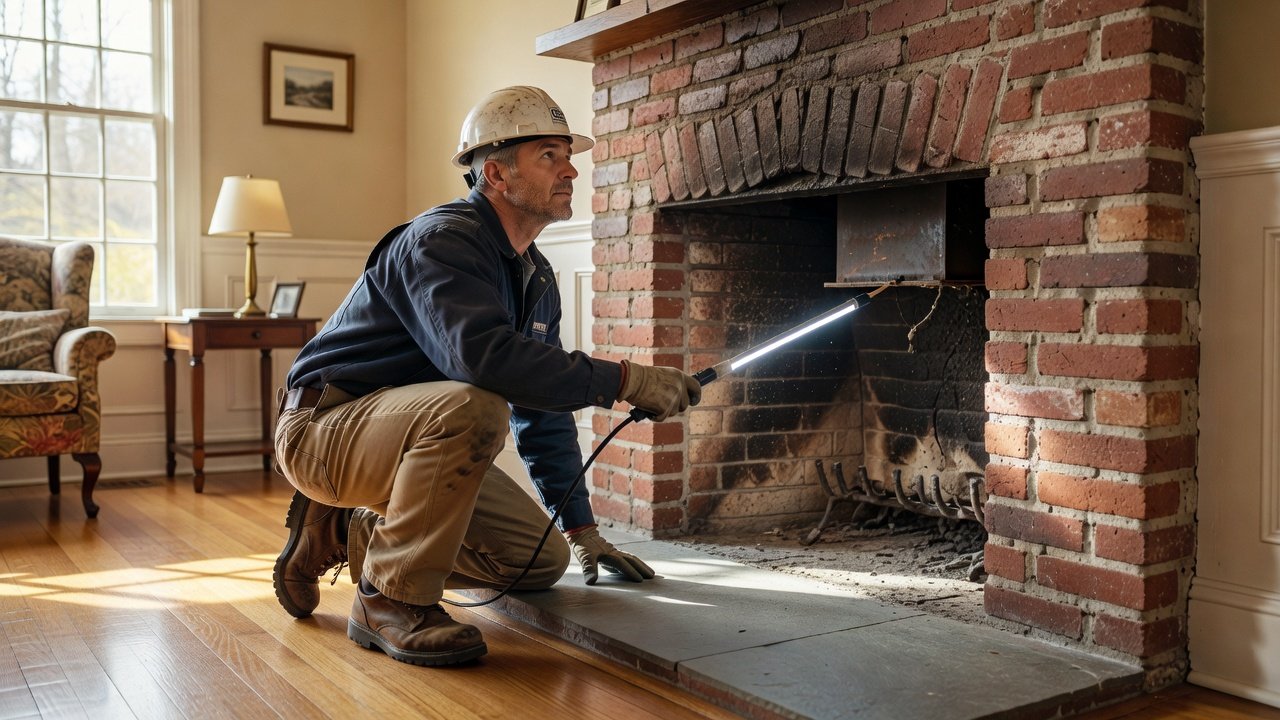
Fireplace Cleaning in Glen Cove, NY: What Homeowners Should Know
Fireplace cleaning is easy to put off when a fireplace seems to work normally. But soot, creosote, debris, and hidden chimney damage may not be obvious from the living room. An unusual smoky smell, smoke entering the room, or debris falling into the fireplace can be reasons to arrange a professional assessment. Routine chimney inspections help identify potential problems before the heating season begins.
For homeowners in Glen Cove and nearby Nassau County communities, understanding how often a chimney needs attention, what cleaning involves, and when to call a professional can make fireplace maintenance easier to plan.
Your Questions About Fireplace Cleaning in Glen Cove, Answered
How often should a fireplace be cleaned?
Quick answer: Have the chimney inspected at least once a year, and arrange cleaning when the condition of the system indicates it is needed.
The Chimney Safety Institute of America (CSIA) recommends annual inspections for chimneys, fireplaces, and vents, even when they are used infrequently. Animals can build nests in flues during warmer months, and moisture or normal deterioration can create problems even when a fireplace is not being used.
Annual inspection does not automatically mean annual cleaning. For masonry fireplaces, CSIA recommends sweeping when soot or creosote buildup reaches approximately 1/8 inch, and sooner when glazed creosote is present. Factory-built fireplaces may have different cleaning needs depending on their design and the amount of buildup.
Late summer or early fall can be a convenient time to schedule service before demand increases. If you have not arranged an inspection recently, do not wait for the next heating season simply because fall has already passed.
What is creosote, and why does it matter?
Quick answer: Creosote is a combustible residue produced by wood burning that can accumulate inside a chimney flue.
Creosote forms as combustion gases cool and condense along the flue walls. The buildup can appear as loose, flaky deposits, thicker crusty material, or a hard, shiny, tar-like glaze. Its condition affects how difficult it is to remove.
Creosote is a fire hazard because it can ignite under suitable conditions. CSIA identifies approximately 1/8 inch of soot or creosote buildup as a common cleaning guideline for masonry fireplaces, with glazed deposits warranting earlier attention.
Do not try to judge the entire chimney’s condition by looking through the fireplace opening. A qualified chimney professional can assess the buildup and determine whether cleaning or further inspection is needed.
Can homeowners clean a chimney themselves?
Quick answer: A brush kit may remove some loose deposits, but it cannot replace a full assessment of the chimney system.
Cleaning a chimney involves more than brushing the visible flue. The correct equipment depends on the chimney’s dimensions, design, and condition. A homeowner may also be unable to identify hidden liner damage, obstructions, or deposits that are difficult to remove mechanically.
Hard or glazed creosote may require specialized methods. A qualified professional may use chemical treatments in combination with mechanical cleaning when appropriate, but chemical products alone are not a substitute for professional cleaning and inspection.
If you suspect substantial creosote buildup, a blocked flue, or damage to the chimney liner, arrange a professional assessment rather than relying on a basic brush kit.
How much does fireplace cleaning cost in Glen Cove?
Quick answer: The price depends on the chimney, access, buildup, and services required.
A straightforward chimney sweep may cost less than a job involving heavy creosote deposits, difficult access, or additional inspection work. If the assessment reveals a damaged liner, deteriorated masonry, or another defect, repairs will generally be priced separately from routine cleaning.
Before scheduling, ask what the quoted price includes. Confirm whether it covers the cleaning itself, an inspection, any video scanning, and a written report. Also ask whether additional work requires your approval before it begins.
Local prices can vary, so obtain a current estimate from a qualified provider rather than relying on a general online price range. A clear estimate should explain the scope of work and identify any services that may incur additional charges.
What can happen if I skip cleaning and inspection for several seasons?
Quick answer: Creosote and debris can accumulate, while deterioration or other chimney problems may remain undetected.
The risk depends on how often the fireplace is used, the fuel burned, the burning conditions, and the chimney’s design. Wood-burning fireplaces can accumulate creosote, while birds or other animals may obstruct a flue even when the fireplace is rarely used.
A damaged or obstructed chimney can also interfere with the safe venting of combustion gases. The U.S. Consumer Product Safety Commission advises having home heating systems, chimneys, and flues inspected regularly for blockages, corrosion, disconnections, and other problems.
Do not assume that a fireplace is safe simply because it worked the last time you used it. If you notice smoke entering the room, visible damage, or other concerning symptoms, stop using it until the cause has been assessed. If a carbon monoxide alarm sounds, leave the home immediately and contact emergency services.
Can coastal conditions affect chimneys around Glen Cove?
Quick answer: Moisture exposure and weather can contribute to chimney deterioration, but the actual condition of each chimney matters most.
Chimneys in coastal communities may be exposed to moisture, wind-driven rain, and airborne salt. Depending on the materials and exposure, these conditions can contribute to corrosion of metal components or deterioration of masonry. Freeze-thaw cycles can also worsen damage when water enters porous materials.
During an inspection, ask the professional to check accessible masonry, mortar joints, the chimney crown, cap, and flashing for signs of deterioration or water intrusion. A damaged cap or crown may allow moisture to enter the chimney, but the appropriate repair depends on the component and the nature of the damage.
Do not assume that every chimney near the water has accelerated deterioration. A professional assessment is the best way to identify any existing problems and determine whether repairs are needed.
What is the difference between chimney cleaning and chimney inspection?
Quick answer: Cleaning removes deposits and debris; an inspection evaluates the condition of the chimney system.
A chimney sweep removes soot, creosote, and appropriate debris from the flue. An inspection assesses accessible components and looks for defects, deterioration, obstructions, and other issues that may affect safe operation.
The appropriate inspection level depends on the circumstances. A Level I inspection is generally suitable for routine evaluation when the system has not undergone relevant changes and there is no known reason to suspect damage. A Level II inspection includes additional accessible areas and an internal flue scan when feasible. It is appropriate in circumstances such as a property sale or transfer, certain appliance or fuel changes, and events that may have damaged the chimney.
Ask the contractor which inspection level is recommended and whether it is included in the cleaning estimate. Cleaning alone cannot establish that every part of the chimney is in good condition.
When is the best time to schedule fireplace cleaning in Glen Cove?
Quick answer: Schedule ahead of the heating season if possible, but arrange service whenever an inspection or cleaning is needed.
Late summer and early fall are popular times to book chimney services, and appointments may become harder to secure as temperatures drop. Scheduling earlier can give you more flexibility if the inspection identifies repairs that need to be completed before you use the fireplace.
Spring and summer can also be convenient times to arrange an inspection or plan maintenance. If you notice a problem during the heating season, do not wait until the following year to address it.
Fireplace Cleaning in Glen Cove at a Glance
| Question | Short answer |
|---|---|
| How often should a chimney be inspected? | At least once a year |
| Does every fireplace need annual cleaning? | No. Cleaning depends on buildup and condition |
| What is creosote? | Combustible residue from wood burning |
| When should a masonry fireplace be swept? | CSIA recommends around 1/8 inch of buildup, or sooner if glazed creosote is present |
| Can chemical cleaners replace sweeping? | No. They do not replace professional cleaning and inspection |
| Does cleaning repair a damaged liner? | No. Structural defects require separate assessment and repair |
| What is the best time to schedule? | Before the heating season, or promptly when a problem arises |
Schedule Fireplace Cleaning in Glen Cove
If you have questions about fireplace cleaning in Glen Cove or elsewhere in Nassau County, contact a qualified chimney professional to discuss your system and arrange an appropriate assessment.
Ask what the service includes, whether an inspection is part of the appointment, and how any findings will be documented. If repairs are recommended, request an explanation of the problem and a written estimate before authorizing additional work.
Regular inspection, cleaning when needed, and prompt attention to identified defects can help homeowners maintain their fireplaces and chimneys. The goal is not to sell unnecessary services, but to understand the condition of the system and address the problems that are actually present.
Frequently Asked Questions About Fireplace Cleaning in Glen Cove
Does homeowners insurance cover damage caused by a chimney fire?
Coverage depends on the terms of the individual policy, the circumstances of the loss, and the insurer’s assessment. Do not assume that a claim will automatically be approved or denied because cleaning records are missing. Review your policy and contact your insurer with questions about coverage and documentation requirements.
Keeping records of inspections, cleaning, and repairs is good practice. Written reports and receipts can help document the maintenance performed on the chimney.
How long does professional fireplace cleaning take?
The duration depends on the chimney’s design, accessibility, condition, and the work required. A straightforward sweep may take less time than a job involving heavy buildup, multiple flues, difficult access, or additional inspection work.
Ask the provider for an estimated appointment length when booking. The estimate may change if the technician discovers conditions that require further assessment.
Does a gas fireplace need the same cleaning as a wood-burning fireplace?
Gas-burning systems generally do not produce wood-burning creosote, but they still require appropriate inspection and maintenance. Vents can become obstructed, components can deteriorate, and the appliance may develop problems that affect safe operation.
Have the appliance and venting system inspected according to the manufacturer’s guidance and applicable recommendations. The service required will depend on the type of gas fireplace and its condition.
Can I use my fireplace while waiting for a cleaning appointment?
That depends on the reason for the appointment and the known condition of the chimney. If you suspect a chimney fire, a blockage, significant damage, or a serious venting problem, stop using the fireplace until it has been professionally evaluated.
An unusual smell by itself does not establish the cause, but smoke entering the room or other warning signs should not be ignored. If a carbon monoxide alarm sounds, leave the home immediately and call emergency services. Never ignore a CO alarm.
Does a chimney cap eliminate the need for cleaning?
No. A properly fitted cap can help keep out rain, animals, and some debris, but it does not prevent creosote from forming when wood is burned. A cap can also become damaged or obstructed.
Have the cap and other accessible chimney components checked during routine maintenance. A chimney cap is one part of protecting the system, not a replacement for annual inspection or cleaning when needed.
Related from Chimney Glen Cove: Fireplace Damper Repair Passaic in Glen Cove · Fireplace Damper Repair Passaic Glen Cove · Fireplace Damper Repair Passaic in Glen Cove
Our services
Fireplace Damper Repair Passaic in Glen Cove · Fireplace Damper Repair Passaic in Glen Cove · Fireplace Damper Repair Passaic in Glen Cove · Fireplace Damper Repair Passaic in Glen Cove · Fireplace Damper Repair Passaic Glen Cove · Fireplace Damper Repair Passaic in Glen Cove
Areas we serve
Locust Valley, NY · Glen Head, NY · Sea Cliff, NY · Plainview, NY · Port Washington, NY · Northport, NY · Commack, NY · Smithtown, NY