
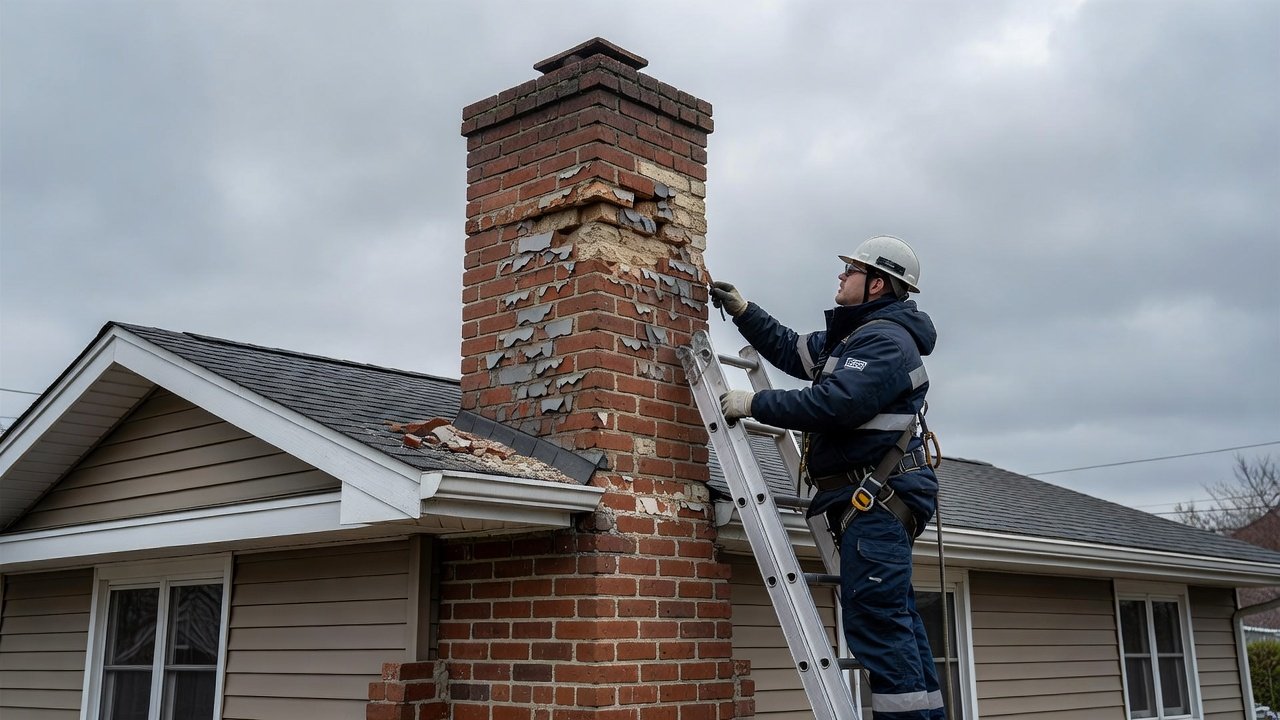
Honest Guide to chimney rebuild Clifton NJ: 2026 Guide for Hicksville Residents
A chimney rebuild is not a service you shop for twice. The price range is genuinely wide anywhere from $1,500 for a partial above-the-roofline rebuild to $8,000 or more for a full teardown and reconstruction and the difference between a competent job and a sloppy one won’t show up until your next hard winter. Here is what actually drives that cost, and how to hire someone you won’t regret.
Why Hicksville Homeowners Are Searching for This in the First Place
Most of the chimneys in Hicksville and across Nassau County were built between the 1950s and early 1970s, during the same postwar housing boom that filled out Levittown and East Meadow. That brick and mortar has been soaking up salt air and cycling through freeze-thaw for sixty-plus years. By the time a homeowner notices spalling brick or a leaning crown, the deterioration is usually well advanced.
A homeowner in Hicksville called us in February 2026 after a neighbor pointed out that the top section of his chimney had shifted visibly the stack was leaning a few inches off center. He had already gotten two quotes, both from companies he found searching for a chimney rebuild. The quotes were $2,200 apart and neither estimate explained what was actually included. Our inspection found that the original liner had never been properly sealed, water had been tracking into the masonry for years, and only a partial rebuild from the roofline up was structurally necessary not a full-stack replacement. He saved money and got a job that addressed the real problem.
That gap between quotes is not unusual. Understanding why helps you evaluate any estimate honestly.
What Actually Drives the Cost of a Chimney Rebuild
The single biggest cost variable is scope. “Chimney rebuild” can mean almost anything: repointing deteriorated mortar joints, rebuilding just the crown, replacing the top four feet of brick above the flashing, or tearing the stack down to the firebox and starting over. A contractor who jumps to a full rebuild recommendation without a camera inspection of the flue or a careful assessment of the firebox walls is either inexperienced or padding the job.
After scope, materials matter. Standard clay flue tile is less expensive than stainless steel liner systems or poured-in-place liners. If you rebuild requires a new liner which it often does when the original clay tiles have cracked that adds $1,000 to $3,000 depending on height and diameter. Chimney height is straightforward: more brick, more labor, more cost. Accessibility is less obvious but real; a chimney on a steeply pitched roof in Syosset or a tight lot in Great Neck costs more to stage safely than one on a flat ranch in Massapequa.
According to the National Fire Protection Association (NFPA), heating equipment including chimneys and fireplaces is a leading cause of home fires in the United States, responsible for approximately 1 in 7 home fires annually. That statistic matters here because it underlines why corners cut during a rebuild carry real consequences. A rebuild done with the wrong mortar mix or without addressing the liner is not just money wasted it’s a fire and carbon monoxide hazard.
Credentials Worth Asking About Before You Sign Anything
The Chimney Safety Institute of America (CSIA) certifies chimney sweeps and inspectors. A CSIA-certified technician has passed a written examination and is required to stay current with updated standards. It is the baseline credential to ask for. Some contractors also hold National Fireplace Institute (NFI) certification, which is more relevant if your job involves an insert or a gas appliance, but it signals professional seriousness either way.
Beyond credentials, ask for proof of liability insurance and workers’ compensation. Masonry work on a roof carries genuine injury risk. If a crew member falls on your property and the contractor has no workers’ comp, you have a problem. This is not hypothetical it comes up.
The Chimney Safety Institute of America (CSIA) recommends that chimneys, fireplaces, and vents be inspected at least once per year, regardless of use frequency. A reputable contractor will insist on a proper inspection before proposing any rebuild scope. If someone quotes you a rebuild price over the phone or after a five-minute visual from the ground, walk away.
Questions to Ask Before Hiring
Ask these directly, and pay attention to how comfortable the contractor is answering them.
What specific section of the chimney are you rebuilding, and why? The answer should be precise not “the whole thing needs to go” without supporting evidence from an inspection. Ask to see photos or video from our chimney inspection service if one was performed.
What mortar type are you using and why is it right for this chimney? Mortar hardness must be matched to the brick. Type S is common for above-grade masonry in our climate; using a mortar that is harder than the brick causes the brick faces to spall. A contractor who can’t answer this question should not be touching your chimney.
Does this rebuild include the liner, the crown, and the flashing or are those separate line items? Get the scope in writing. Verbal assurances about what’s “included” are worthless once the crew has left.
How do you handle the flashing at the roofline, and will you be coordinating with a roofer if needed? Chimney-to-roof flashing is one of the most common failure points and one of the most commonly ignored in a rebuild quote.
What is your warranty on labor and materials? A reputable mason will stand behind the work for at least one year. Some offer longer. Anyone reluctant to commit to a written warranty is signaling something.
Red Flags That Signal a Problem
Door-to-door solicitation after a storm is the most consistent red flag we hear about from homeowners in Plainview, Port Washington, and Oyster Bay alike. Storm chasers typically offer low initial bids and then find “additional damage” once work begins. Get your own inspection first, from a company you contacted independently.
Cash-only pricing is another warning sign, especially for jobs above $1,000. It makes dispute resolution nearly impossible and often signals an uninsured operation.
Vague written estimates are as dangerous as verbal promises. If the contract says “chimney rebuild” without specifying materials, courses of brick, liner work, and crown construction, you have no recourse when the job falls short.
According to the NFPA, creosote buildup is the leading cause of chimney fires, with failure to clean cited in the vast majority of chimney fire incidents. Any contractor who proposes a rebuild without mentioning the condition of the flue or who doesn’t ask about your last chimney sweeping is missing a critical part of the picture.
How to Compare Quotes Without Getting Burned
Line-item the estimates side by side. If one quote bundles everything and another breaks out materials, labor, liner work, and crown replacement separately, they are not directly comparable until you ask the bundled bidder to itemize. A $3,800 quote that includes a stainless steel liner, new crown, and step flashing is genuinely cheaper than a $3,200 quote that excludes all three.
Timing affects price. Winter in Nassau County is slower for exterior masonry, and some contractors discount work in January and February. That can be a legitimate way to save several hundred dollars, provided mortar temperatures are managed correctly cold-weather masonry requires heated materials and protection from freezing during the cure period. Ask specifically how they handle that.
We are happy to walk any homeowner through a written estimate comparison with no obligation. Whether you are in Hicksville, Wantagh, or Merrick, reach out through our website contact form and one of our technicians will review what you have been quoted and tell you plainly what questions remain unanswered.
Frequently Asked Questions
How much does a chimney rebuild typically cost for a Nassau County home?
Partial rebuilds from the roofline up generally run between $1,500 and $4,000 in this area depending on brick height, liner condition, and access. Full stack rebuilds from the firebox can reach $6,000 to $9,000 or more. The only honest answer requires an in-person inspection first; any firm price quoted without one should be viewed skeptically.
Does a chimney rebuild the same as repointing?
No. Repointing also called tuckpointing means grinding out deteriorated mortar joints and replacing them while leaving the bricks in place. A rebuild means dismantling and reconstructing one or more sections of the chimney. Repointing is appropriate when the brick itself is sound; a rebuild is necessary when structural integrity has been compromised. Both services look similar from a distance, which is why an accurate diagnosis matters.
Do I need a permit for a chimney rebuild in Hicksville, NY?
In most Nassau County municipalities, structural masonry work on a chimney does require a building permit. Your contractor should handle the permit application as part of the job. If a contractor tells you a permit is not necessary for a full or partial rebuild, ask them to put that in writing that should prompt a more careful answer.
What credentials should a chimney rebuild contractor have?
At minimum, look for CSIA certification, proof of general liability insurance, and an active workers’ compensation policy. NFI certification is a plus. Ask to see documents, not just hear verbal assurances.
How long does a chimney rebuild take?
A typical partial rebuild on a standard two-story home takes one to three days. Full rebuilds, or projects complicated by difficult roof access or custom brick matching, can take longer. Factor in cure time — mortar on a new rebuild needs roughly 28 days to reach full strength, so avoid heavy fireplace use immediately after completion.
Can I use my fireplace while waiting for a chimney rebuild?
If the chimney has been assessed as structurally compromised or the liner is cracked, the answer is no. A damaged liner can allow carbon monoxide and combustion gases to enter the living space. The U.S. Consumer Product Safety Commission (CPSC) estimates that carbon monoxide poisoning linked to clogged or malfunctioning chimneys and vents sends thousands of Americans to emergency rooms each year. Have the system inspected and follow the technician’s guidance before lighting another fire.
Related from Chimney Glen Cove: Chimney Clifton · Chimney Sweep in Clifton, NJ · Chimney Rebuild Clifton – Expert Masonry Restoration for Passaic-Area
Our services
Chimney Cleaning · Fireplace Damper Repair Passaic in Glen Head · Fireplace Damper Repair Passaic in Glen Head · Fireplace Damper Repair Passaic in Sea Cliff · Fireplace Damper Repair Passaic in Glen Cove · Fireplace Damper Repair Passaic in Glen Cove
Areas we serve
Northport, NY · Commack, NY · Smithtown, NY · Melville, NY · Locust Valley, NY · Glen Head, NY · Sea Cliff, NY · Plainview, NY