Searching for a Chimney Sweep Clifton NJ? Here’s What Glen Cove Homeowners Should Know in 2026
Are you typing “chimney sweep Clifton NJ” into a search bar while sitting in Glen Cove, NY? If so, you’re not alone and the mix-up is more common than you’d think. More importantly, the questions behind that search are ones we hear every week: when should I book a chimney sweep, does timing actually matter, and what happens if I wait? We want to address those questions honestly, because the answers could save you real money and keep your family safer this heating season.
We’re Chimney Glen Cove, and we serve homeowners across Nassau County Glen Cove, Sea Cliff, Glen Head, Locust Valley, Oyster Bay, and beyond. We know the housing stock here: older colonials, Cape Cods built in the postwar era, and a lot of masonry chimneys that have been quietly absorbing decades of Long Island’s coastal salt air, freeze-thaw cycles, and nor’easter moisture. The chimney that served your grandfather just fine still needs annual attention and the timing of that attention matters more than most people realize.
The Myth That Summer Is Too Early
One of the most persistent things we hear is that calling a chimney sweep in July or August is jumping the gun. Homeowners in Oyster Bay tell us they’ll “wait until fall,” and homeowners in Bayville say they’ll “get to it before Thanksgiving.” Both groups often call us in November, when our schedule is fully booked and they’re cold.
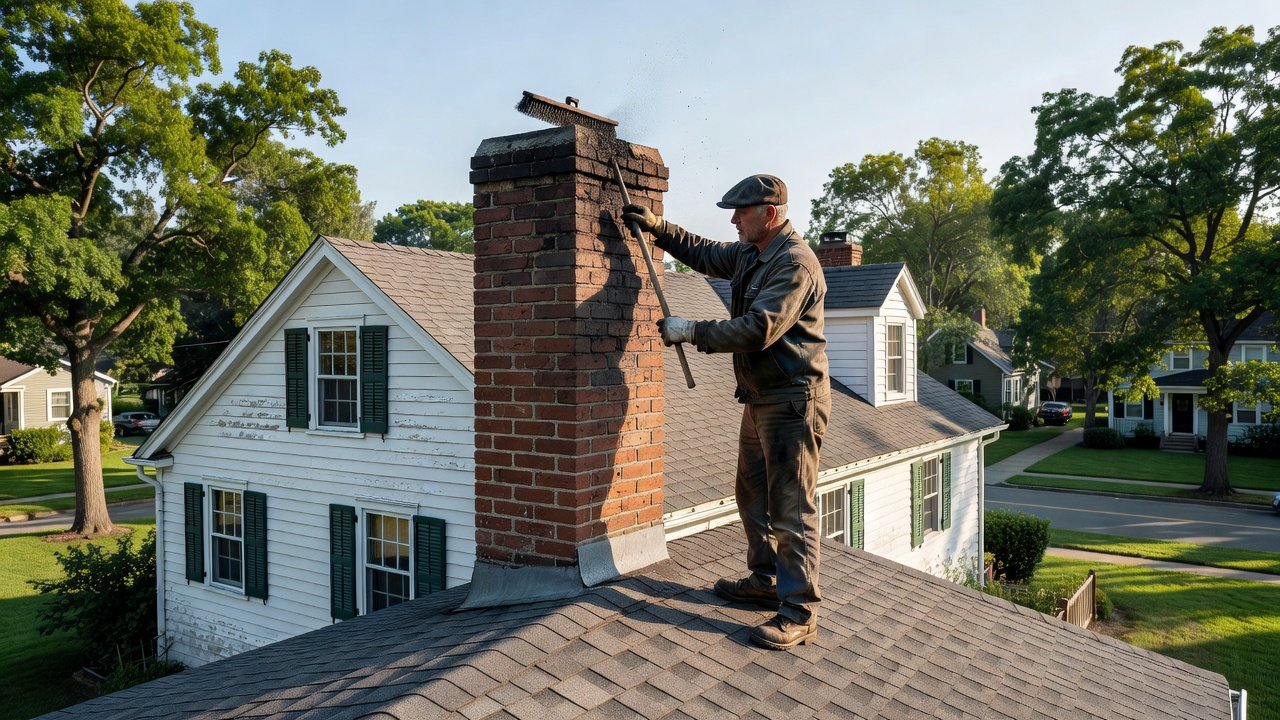
Here’s the reality: the best time to schedule a chimney sweep is late spring through midsummer. The firebox has cooled completely, the creosote deposited over winter has had time to dry and harden (which actually makes it easier to remove), and our team has availability that disappears once October arrives. Booking in June or July is not early it’s smart scheduling. Waiting until the first cold snap is the costly choice.
Thinking One Season of Light Use Means You Can Skip the Sweep
A homeowner in Sea Cliff called us last January after a particularly cold stretch. She’d used her fireplace only a handful of times the previous winter and assumed a light season meant a clean flue. When our technician ran a camera through the liner, we found a third-of-an-inch creosote deposit borderline by any standard plus a section of damaged tile that had gone unnoticed for at least two heating seasons.
The National Fire Protection Association’s NFPA 211 standard is clear on this point: solid-fuel-burning appliances and their associated chimneys must be cleaned when creosote deposit buildup exceeds 1/8 inch. That threshold can be reached in a single moderate heating season, especially in older systems where the flue draws inefficiently and combustion gases cool before fully exiting. “Light use” doesn’t equal “no buildup.” The NFPA also reports that creosote buildup is the leading cause of chimney fires, with failure to clean cited in the vast majority of incidents. One sweep a year is a reasonable baseline regardless of how often you lit fires.
Assuming the Inspection and the Sweep Are the Same Thing
We sometimes arrive at a home in Glen Head and hear a homeowner say, “We had it inspected a couple years ago, so we should be fine.” An inspection and a chimney sweep are related services, but they’re not interchangeable. A sweep removes combustible deposits. An inspection particularly a Level 2 inspection that includes video scanning of the flue evaluates the structural integrity of the liner, the firebox, the crown, and the exterior masonry.
According to the Chimney Safety Institute of America (CSIA), a Level 2 chimney inspection is required whenever a home is sold or after any event that may have caused damage to the chimney system. But even in the absence of a triggering event, the CSIA recommends annual inspections for all chimneys regardless of use frequency. If you’ve had an inspection but not a sweep, or a sweep but not a proper inspection with a camera, you may have an incomplete picture of what’s happening inside that flue. Our chimney inspection service covers both, so there’s no gap.
Believing the Price Is the Same No Matter When You Call
Across Nassau County, chimney sweep pricing in 2026 reflects real market demand. A standard single-flue sweep during the spring or summer off-peak window typically runs in the $175–$250 range for most homes. Call in October or November and you may pay a premium for expedited scheduling, or simply find that availability doesn’t exist at all until after the holidays. We’ve spoken to homeowners in Locust Valley who waited too long, ended up using gas or electric heat as a stopgap, and spent more on energy bills than the early sweep would have cost. The math isn’t complicated.
Beyond the sweep itself, damage discovered late in the season often means repair work repointing, liner patching, or chimney cap and waterproofing installation that has to happen before the system is safe to use. Those costs compound quickly when winter is already underway and conditions aren’t ideal for masonry work.
Thinking Carbon Monoxide Risk Only Comes From Gas Appliances
This one matters for safety, so we’ll be direct. Many homeowners associate carbon monoxide risk with gas furnaces and water heaters and don’t connect it to a wood-burning fireplace or a wood stove. The U.S. Consumer Product Safety Commission (CPSC) estimates that carbon monoxide poisoning linked to clogged or malfunctioning chimneys and vents sends thousands of Americans to emergency rooms each year and that figure includes wood-burning systems with restricted or deteriorated flues. A blockage from bird nesting material, a collapsed tile, or simply dense creosote buildup can all cause combustion gases to back-draft into living spaces. Our coastal winters damp, windy, with pressure fluctuations that affect draft make Glen Cove chimneys particularly susceptible. A clean, inspected flue is your first line of defense.
Ready to Get Ahead of It This Year?
We work with homeowners across Nassau County from Bayville down to Long Beach, from Syosset out to Great Neck and the ones who book early consistently pay less, have more scheduling flexibility, and head into the heating season without a last-minute scramble. Our team offers chimney sweeping, camera inspections, structural repairs, and waterproofing, all performed by technicians who know Long Island chimneys specifically.
If you’re ready to get it done right this year, reach out through our website contact form and we’ll get back to you promptly with a free estimate. No pressure, no upsell, just honest work from a local crew that knows this area.
Frequently Asked Questions
Why am I finding results for “chimney sweep Clifton NJ” when I live in Glen Cove, NY?
Search engines sometimes surface results based on proximity to metro areas or crossed service boundaries. Clifton, NJ is across the Hudson from the New York metro, but it’s a completely different service area. If you’re in Glen Cove or anywhere in Nassau County, you want a local company that knows Long Island chimney construction, coastal conditions, and local building codes not a team commuting from New Jersey.
What’s the best time of year to schedule a chimney sweep in Nassau County?
Late spring through midsummer is ideal. Schedules open up, pricing is typically standard, and you’ll have plenty of time to address any repair work before the heating season. We see demand spike sharply in October and November, which limits availability for homeowners who wait.
How often should a chimney be swept in Long Island’s climate?
At minimum, once per year. Long Island’s coastal humidity, salt air, and freeze-thaw cycles accelerate both creosote formation and masonry deterioration. Homes with gas fireplaces still need annual inspections, even if sweeping isn’t always required on the same schedule.
Does a chimney need to be swept if the fireplace was barely used last winter?
Yes. Creosote can reach the 1/8-inch threshold specified by NFPA 211 in a single moderate season. Beyond creosote, an annual sweep appointment also catches structural issues cracked tiles, mortar erosion, animal nesting that have nothing to do with how often you burned wood.
What does a chimney sweep typically cost in Glen Cove in 2026?
For a standard single-flue fireplace, expect a range of roughly $175–$250 during off-peak months. Prices can be higher for two-flue systems, heavily sooted flues, or rush appointments during the fall rush. Any repair work identified during the sweep is quoted separately before we proceed.
Is a chimney sweep the same as a chimney inspection?
No. A sweep removes combustible deposits from the flue. An inspection particularly a Level 2 inspection with a camera evaluates the structural condition of the entire system. Both are usually recommended together. The CSIA advises at least annual inspections for all chimneys, and we recommend combining the sweep and inspection in one visit for efficiency and a complete picture of your system’s health.
Related from Chimney Glen Cove: Chimney Clifton · Fireplace Damper Repair Passaic in Glen Cove
Our services
Chimney Odor Removal Passaic · Chimney Clifton · Chimney Sweep Hicksville · Chimney Cleaning in Syosset · Chimney Inspection in Great Neck · Fireplace Damper Repair in Huntington
Areas we serve
Commack, NY · Smithtown, NY · Melville, NY · Locust Valley, NY · Glen Head, NY · Sea Cliff, NY · Plainview, NY · Port Washington, NY